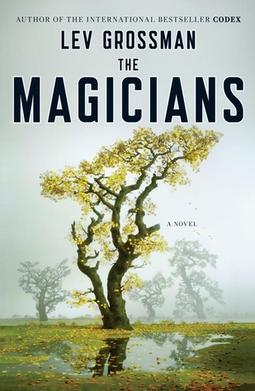
The Magician by Lev Grossman
Hello, it's been a while since I wrote a revie-w,not because I haven't read since last December but simply because I didn't felt the need to share my readings, i. e. do a review. So what changed? Well this book did.It had played with my emotion so much so that I found myself laughing at times and feeling so sad at others. I will explain more later but this book made me feel excited again reading books AND telling / recommending it to others.
About the book.
The book seems similar to Harry Rotter at first. You have a teenage /young adult who got accepted to a magical school. The similarities ends there. When in Harry Potter the story ends as school ends, the part that Isee as the core of the book begins after school. So if you expected adventures where kids go around outsmarting adults like in the Rowlings like me,then you are going to be disappointed.
But the book doesn't disappoint. It later moved on and told the story of the man (boy?) after graduating, love lifes and emptiness of purpose that even plagued magicians. Just as his life was is in stagnant, he and his group came upon a powerful relic. Then they begin their adventures like in, Narnia and LOTR. As George Martin (author of Game of Thrones) said, this book pays homage to lots of classics.
What I really like...
about the book is that the story unfolds unlike your expectation. It is not to say the book is totally unpredictable, only that it has twists at the right moments. For example the protagonist did not have some uncontrollable power that somehow comes out at times of need and conveniently moves the plot, but instead he acted cowardly at times. If you are someone who hates unheroic hero like me (because face it, who wants to read about boring duds who sleep or runaway all the time) don't be. Why? Because this is a fantasy book, there's always redemption..
I mentioned earlier about love lives, and normally what follows is betrayal. What I really liked about it was that the drama actually moved me. Your experience really might differ, and even mine it I were to read it again. Anyway there were times that I felt really sad and it occurred to me that the emotions would be lost if it were turned into a movie because fantasy movies nowadays are all about shimmers and sparks. "This is why I read books!" was the thought that came to me.
Another major thing that I like about the book is there are unexpected situations that made the possibility of existence of magic seems higher since the reaction seems unscripted and real. An example was when the protagonist was to release his demon, it was such a letdown that I laughed out loud .
The Language.
The book is American but most of the words are lost to me. The words are not a' bombastic or enigmatic like say Tolkiens, but somehow the words are disorienting. After awhile I ignore words I do not know like I always do, only for this book, .at a higher rate. In other words, the language is a bit hard.
Recommendations
A fantasy book. Clever plots and interweawing storylines. There are some adults scenes but not so vividly described.
Overall I would recommend this book to people who have read the fantasy classics and wish them to be retold in less child - like manner.
Try it. There's even a sequel that I am going to try and get my hands on soon.
Thanks for reading.
Saturday, June 8, 2013
Tuesday, October 23, 2012
The Boy in the Striped Pyjamas
by John Boyne. took almost 3 hours.
I bought this book after reading a preview of it in Amazon. From the snippets I gather the book was told from a child's point of view, which normally meant an interesting read. Only after I bought it did I know the book was about concentration camps and Jews, and that it had(not surprisingly) turned into a film.
The Synopsis.
The book tells about a boy who had to move with his family from Berlin because his father was relocated due to his works. As a normal boy, he rejected the transition and leaving his friends behind but things seemed to look up when he met a friend from the other side of the fence. Things began to grow clearer as their friendship unfolds.
The Language.
The book uses simple languages and it tried to replicate children's point of view(the book is told from a third person view though). Language is simple enough but like what's written on the blurb at the back of the book itself, this book is not a book for nine-years-old.
Recommendation.
As I first picked up this book, I felt that I had returned to my childhood reading all those books by Enid Blyton or even E. Nesbits. These are the books that were written in the middle of last decade and they were stories about boys and girls going on adventures. Thus far, the Boy in the Striped Pyjamas was promising. But then I discovered that the book was set in Berlin and the similarities ends there. When I realized the book was about concentration camps and came to the word-play Out-With, I was a bit disappointed.
Then the boy met and befriended another boy from the other side of the camp, Shmuel, and began to talk about their daily lives. The book had quite a few chance to climax from here but it trudges a bit slowly onwards, without any other surprise. The only surprise came in the end and I guess the book was written just for that punch line.
Regarding the contentious plot of the book which is about concentration camps, I'd imagine myself and a few others would distance themselves from reading this if they knew it beforehand.It is a reverberating plot in books and films, that one can grow jaded. If that is not a issue and you like a book that tells a moral through innocent voice, then this book should be a great read.
It is by the way a short book and quite entertaining.
Labels:
fiction,
history,
movie-converted
Friday, October 19, 2012
Muse: Resistance and 1984
This is not a book review.
I've just realised that this song below, resonates with 1984 written by George Orwell.(book review here)
The words seem to connect in the least, or might even be lifted off the book. Not sure and not so keen to jump back into the book and certify.
Among the phrases that reminded me of 1984:
Thought police. - just that. thought police
Is our secret save tonight, will they find our hiding place- reminds me off the characters' secret meetings.
Love is our resistance- kinda cheery. The book alludes that love is futile as resistance.
I love it when what you read, can be connected to other things.
I've just realised that this song below, resonates with 1984 written by George Orwell.(book review here)
The words seem to connect in the least, or might even be lifted off the book. Not sure and not so keen to jump back into the book and certify.
Among the phrases that reminded me of 1984:
Thought police. - just that. thought police
Is our secret save tonight, will they find our hiding place- reminds me off the characters' secret meetings.
Love is our resistance- kinda cheery. The book alludes that love is futile as resistance.
I love it when what you read, can be connected to other things.
Monday, September 3, 2012
Confessions of an Economic HiT MAN
by John Perkins. took me around a month.
Actually I read the few first chapters quite quickly but almost 90% through, I put it down and one thing after another, I only managed to pick it up back again just now, when I found out that I have less than 10 pages to the end! The rest of the book that I thought were more chapters, are actually references. I should have finished it a month ago, =.="
Well the reason I put the book down in the first place was because the book was having an impact on me. The things that it talked about, were making me thought, so I had to stop to ponder for a bit. It was not in any way because the book was boring, although it might get slightly repetitive. But hey, the book touches upon history and history, always repeats.
The Synopsis.
John Perkins is an American and was born to the middle class. After he tells the reader about his background, which is important to the book, he then relates the story of how he became an Economic Hitman. If you've never heard that term, just imagine George Soros, someone who is notoriously famous to the Malaysian. If you've never heard Soros too, never you mind because an Economic Hit Man(or for short, EHM) are people whose works are to cause a country to be so deep in debt, that they had to bow to their creditor. In this book, the United States of America, or maybe the IMF (they seem interchangable to me).
The EHM works consist of forecasting growth if a certain project is build, writing reports how dams and electricity can raise the GDPof a country, writing proposal for development plans, etcetera and I think the most important of all, they lubricate the process of approval. These EHMs bribe, threat, and sneak their way to the leaders of a country, so that the leaders or the leading elites will approve their plans and allow foreign companies(American companies such as Halliburton) to come into this country and run the 'development' plan.
If this EHM fails, the CIA will come in with their unit, known in the book as "jackals", who assassinate leaders who refuse to submit to the system.
If the jackal fails too, the last step is by war and invasion. Which what happened in Iraq.
All of these, were in the book or suggested by it.
Language.
I like reading the book. I use the word like, because it is a simple term, since the book used simple terms. It was written for a layman's reading and I think the messages came much clearer this way. There's some finance term but I tend to ignore them or they are repeated often enough that they define themselves as you continue reading.
Recommendation.
Although the book is written in simple terms, there's a thick references pages at the end of the book. So if you are interested and want to further read, or maybe dispel the idea, about EHMs and the systems, the references with its sources at the end seems like a good place to start. For me however, it might take awhile before I read another book in this same scope of focus. I found that, what I have picked up before from reading and thinking, was true and the whole world perpetuates on a disproportionate 'equilibrium'. Make no mistakes, this book is not about conspiration theories and all those Illuminati bullocks, but it is about the system that we live in. I'll maybe blog more about what I learn from the book later. As for the book, other than a few suggestions, it hardly offers a solution to the situation it spotlighted. However like the writer said, the book is of a confessions of an Economic Hit Man, not a corrective guideline.
But hey, one can learn a lot from another's person confession, right?
Do read this book. And think.
Actually I read the few first chapters quite quickly but almost 90% through, I put it down and one thing after another, I only managed to pick it up back again just now, when I found out that I have less than 10 pages to the end! The rest of the book that I thought were more chapters, are actually references. I should have finished it a month ago, =.="
Well the reason I put the book down in the first place was because the book was having an impact on me. The things that it talked about, were making me thought, so I had to stop to ponder for a bit. It was not in any way because the book was boring, although it might get slightly repetitive. But hey, the book touches upon history and history, always repeats.
The Synopsis.
John Perkins is an American and was born to the middle class. After he tells the reader about his background, which is important to the book, he then relates the story of how he became an Economic Hitman. If you've never heard that term, just imagine George Soros, someone who is notoriously famous to the Malaysian. If you've never heard Soros too, never you mind because an Economic Hit Man(or for short, EHM) are people whose works are to cause a country to be so deep in debt, that they had to bow to their creditor. In this book, the United States of America, or maybe the IMF (they seem interchangable to me).
The EHM works consist of forecasting growth if a certain project is build, writing reports how dams and electricity can raise the GDPof a country, writing proposal for development plans, etcetera and I think the most important of all, they lubricate the process of approval. These EHMs bribe, threat, and sneak their way to the leaders of a country, so that the leaders or the leading elites will approve their plans and allow foreign companies(American companies such as Halliburton) to come into this country and run the 'development' plan.
If this EHM fails, the CIA will come in with their unit, known in the book as "jackals", who assassinate leaders who refuse to submit to the system.
If the jackal fails too, the last step is by war and invasion. Which what happened in Iraq.
All of these, were in the book or suggested by it.
Language.
I like reading the book. I use the word like, because it is a simple term, since the book used simple terms. It was written for a layman's reading and I think the messages came much clearer this way. There's some finance term but I tend to ignore them or they are repeated often enough that they define themselves as you continue reading.
Recommendation.
Although the book is written in simple terms, there's a thick references pages at the end of the book. So if you are interested and want to further read, or maybe dispel the idea, about EHMs and the systems, the references with its sources at the end seems like a good place to start. For me however, it might take awhile before I read another book in this same scope of focus. I found that, what I have picked up before from reading and thinking, was true and the whole world perpetuates on a disproportionate 'equilibrium'. Make no mistakes, this book is not about conspiration theories and all those Illuminati bullocks, but it is about the system that we live in. I'll maybe blog more about what I learn from the book later. As for the book, other than a few suggestions, it hardly offers a solution to the situation it spotlighted. However like the writer said, the book is of a confessions of an Economic Hit Man, not a corrective guideline.
But hey, one can learn a lot from another's person confession, right?
Do read this book. And think.
Labels:
(auto)biography,
makes me thing(k),
non-fiction
Friday, July 27, 2012
The Immortalists
by Kyle Mills. approx 10 hours.
The reason I bought the book was because I read the preview and it had caught my interest. In the review, a top biologist researcher came home and discovered an unknown man in his house. This man then forced her to kill herself, just because someone had ordered her assisination to look as a suicide. Quite intriguing, eh?
The Synopsis.
The story then unfortunately follows a man named Richard who is also a biologist, one of the best in the field after supposedly, as the aforementioned woman biologist had died. Richard had a daughter who suffers a genetic disease where she grew old at an extremely fast rate.Racing against time, he tries to find a cure to her daughter's condition. Through certain cimcustances Richard and his wife discovered that an organization has discovered to reverse aging and in his pursue to save her daughter, they are in turn pursued by the organization itself, The Immortalists.
Language
The book has very concise words, some that I even don't know. Actually, I had to look up most of the words. That being said, I wouldn't say the writer only uses bombastic words to impress, since they are used 'appropriately'. Cathartic, is one of the example, where a scientist threw all his research and Richard asked if he didn't save even any of the research and was answered, " No, it wouldn't be cathartic if I do that, would it?" There are a few more examples but this stuck to my mind.
Recommendation.
This is an action packed story after all, it was not meant to be make you ponder that much, right. Still, when I stopped reading for a while, I find it hard to pick the book up again. Mainly because I don't really care what happens to the main character, he's a bit selfish you know. And the fact that he is a biology genius(really?) doesn't help.
Regarding the compact language, it was enriching to learn new words but on the other end, the book suffers since the book is made up of very short chapters. It left me wishing the writer had written more to describe the action. He leaves most of the plodding to the mind, but if most of the imagining is left to the reader, why read a book , right? At least, that's what I felt.
In the end, the book is meant for a one gulp reading, I think. Mostly recommended for a 9 hour flight maybe where the action will take you through the journey and leave you with a little more vocabulary in the end. Better than an action flick, aite.
I do however like what they did with the book, where they plastered G A T C at the top of the pages. It took me awhile to make me notice and make the connection.
Overall, okay book but not much to be remembered.
The reason I bought the book was because I read the preview and it had caught my interest. In the review, a top biologist researcher came home and discovered an unknown man in his house. This man then forced her to kill herself, just because someone had ordered her assisination to look as a suicide. Quite intriguing, eh?
The Synopsis.
The story then unfortunately follows a man named Richard who is also a biologist, one of the best in the field after supposedly, as the aforementioned woman biologist had died. Richard had a daughter who suffers a genetic disease where she grew old at an extremely fast rate.Racing against time, he tries to find a cure to her daughter's condition. Through certain cimcustances Richard and his wife discovered that an organization has discovered to reverse aging and in his pursue to save her daughter, they are in turn pursued by the organization itself, The Immortalists.
Language
The book has very concise words, some that I even don't know. Actually, I had to look up most of the words. That being said, I wouldn't say the writer only uses bombastic words to impress, since they are used 'appropriately'. Cathartic, is one of the example, where a scientist threw all his research and Richard asked if he didn't save even any of the research and was answered, " No, it wouldn't be cathartic if I do that, would it?" There are a few more examples but this stuck to my mind.
Recommendation.
This is an action packed story after all, it was not meant to be make you ponder that much, right. Still, when I stopped reading for a while, I find it hard to pick the book up again. Mainly because I don't really care what happens to the main character, he's a bit selfish you know. And the fact that he is a biology genius(really?) doesn't help.
Regarding the compact language, it was enriching to learn new words but on the other end, the book suffers since the book is made up of very short chapters. It left me wishing the writer had written more to describe the action. He leaves most of the plodding to the mind, but if most of the imagining is left to the reader, why read a book , right? At least, that's what I felt.
In the end, the book is meant for a one gulp reading, I think. Mostly recommended for a 9 hour flight maybe where the action will take you through the journey and leave you with a little more vocabulary in the end. Better than an action flick, aite.
I do however like what they did with the book, where they plastered G A T C at the top of the pages. It took me awhile to make me notice and make the connection.
Overall, okay book but not much to be remembered.
Monday, July 16, 2012
The Underland Chronicles
written by Suzanne Collins. Approximately 4-7 hours each book.
It seems lately that I have been only reading Suzanne Collins books since the reviews are back-to-back. That is not true. I have read a few other books in between this reviews but since I have not the mood to a review, hence this state. I'll review more often in the future.
Synopsis
The story is about a boy who fell through a hole in his laundry room and into another whole world down under, appopriately called Underland. He then proceeds to solve quest and discover adventures in this fantasy world.
In the first book, Gregor the Overlander, the boy named Gregor discovered about his father location, who was until then had been missing for two years after his sudden disappearance. Other than that, Gregor also discovered that he is viewed as a warrior by the people of the Underland(Underlander) due to his circumstances matching an ancient prophecy.
In Gregor and the Prophecy of Bane, Gregor discovered he had to go back down again in order to save the Underland, also due to a prophecy. In fact, all the books in the series deal with prophecies: Gregor and the Curse of the Warmbloods, Gregor and the Mark of Secret, Gregor and the Code of Claw. Basically that's why I lump them altogether because the chronicle is one continuous adventure conveniently chopped into parts.
Language
I think it's only a little bit higher than Enid Blyton's book. In other words, the language for the book is really simple. I do think the sentences structure are a bit weird and abrupt but I think they are so, because the books are meant to be short
Storytelling
Plot is also simple. Heroes comes, read the prophecy and then saves the day. There are other plot where the hero/reader are guessing a character real intention and such but other than that, it's pretty linear.
My main complain with the book is that it relies too much in prophecy. Problem with that is I do not believe in them and I find them annoying. There are also a lot of part where the prophecy are repeated in order to understand the 'meaning' behind them, so I end up finishing the book quite fast since I glance over those part.
Suzanne Collins did manage to make the Underland believable tho. The species(Rats, Spiders, Humans, Cockcroaches etc) are given a lot of thought and the main character are pleasing enough.
Recommendation/reading age
The book theme seems about peace and war, and how to go about it. It is something that I wouldn't think appropriate for younger teens but then again the language are a bit too easy for older teens. Since you would be preached on difficult themes, why don't you try a book with a more complex story and enriching prose?
So in the end I think this book is for adults who want to have some easy read, like me!, where a hero goes on adventure to kill bad guys, with the theme of peace and war thrown in just for zest.
An easy read. For your free time.
On a previous note, try to read Hunger games if you haven't, instead of this.
written by Suzanne Collins. Approximately 4-7 hours each book.
It seems lately that I have been only reading Suzanne Collins books since the reviews are back-to-back. That is not true. I have read a few other books in between this reviews but since I have not the mood to a review, hence this state. I'll review more often in the future.
Synopsis
The story is about a boy who fell through a hole in his laundry room and into another whole world down under, appopriately called Underland. He then proceeds to solve quest and discover adventures in this fantasy world.
In the first book, Gregor the Overlander, the boy named Gregor discovered about his father location, who was until then had been missing for two years after his sudden disappearance. Other than that, Gregor also discovered that he is viewed as a warrior by the people of the Underland(Underlander) due to his circumstances matching an ancient prophecy.
In Gregor and the Prophecy of Bane, Gregor discovered he had to go back down again in order to save the Underland, also due to a prophecy. In fact, all the books in the series deal with prophecies: Gregor and the Curse of the Warmbloods, Gregor and the Mark of Secret, Gregor and the Code of Claw. Basically that's why I lump them altogether because the chronicle is one continuous adventure conveniently chopped into parts.
Language
I think it's only a little bit higher than Enid Blyton's book. In other words, the language for the book is really simple. I do think the sentences structure are a bit weird and abrupt but I think they are so, because the books are meant to be short
Storytelling
Plot is also simple. Heroes comes, read the prophecy and then saves the day. There are other plot where the hero/reader are guessing a character real intention and such but other than that, it's pretty linear.
My main complain with the book is that it relies too much in prophecy. Problem with that is I do not believe in them and I find them annoying. There are also a lot of part where the prophecy are repeated in order to understand the 'meaning' behind them, so I end up finishing the book quite fast since I glance over those part.
Suzanne Collins did manage to make the Underland believable tho. The species(Rats, Spiders, Humans, Cockcroaches etc) are given a lot of thought and the main character are pleasing enough.
Recommendation/reading age
The book theme seems about peace and war, and how to go about it. It is something that I wouldn't think appropriate for younger teens but then again the language are a bit too easy for older teens. Since you would be preached on difficult themes, why don't you try a book with a more complex story and enriching prose?
So in the end I think this book is for adults who want to have some easy read, like me!, where a hero goes on adventure to kill bad guys, with the theme of peace and war thrown in just for zest.
An easy read. For your free time.
On a previous note, try to read Hunger games if you haven't, instead of this.
Labels:
action,
alternate world,
Fantasy,
light read,
Trilogy/Saga
Monday, February 20, 2012
The Hunger Games trilogy
written by Suzanne Collins. 17-20/2/2012
Time taken to read each book is approximately 9 hours each.
Synopsis
The story is about the world in the distant dystopia future, where a game is held every year, in which the contestants are pit against each other and have to fight to their death until only one survives. The trilogy focus on a young girl, Katniss, who had volunteered herself in replace of her younger sister.
Okay, so the story is a bit like Battle Royale, for those who are familiar with the japanese franchise.However from what I read of the manga Battle Royale, Hunger Games trilogy differs in the way it tells its story. It is told through the view of Katniss, the main character of the story. There's also a lot more drama and plot in this, I think. Of course there's the gory and fights but other than that I feel the trilogy has its own story to tell.
Language
The language of the book is quite simple and the storytelling was brisk. Seldom was lyrical or lenghty prose used in the book. I think the motto of the book should be 'Straight into the action' considering how the books proceeded. It's Katniss' point of view anyway, so the simplicity fits. One thing though that seems weird to me is the book are told in present tense. I don't think it's a problem, only it seems... different than other fictions.
Storytelling
The plot has some twist which are pleasant enough but grows in a somewhat predictable manner. The characters are quite imbalanced I think, where some have a lot of role and parts where others rarely changed or have action but I guess that is the thing with a first person view; you can't tell things that your character don't know. The upside to that is the readers are flogged with Katniss' emotions and turmoil, which leads to my opinion that she is a very selfish person. One might disagree but I think she is so selfish and there are times that I wish that I could just crack her head open with a rock. Ops, too much opinion, haha.
Recommendation/reading age
There's almost no adult's scene. The scenes are not so gory, considering it is a book about death's game. I think the book is suitable for teens since it appeases them but still has morals such as the pain of wars etc.
Try Hunger Games first. If you like it you'll probably like the rest, Catching Fire and Mockingjay. My list of favourite is also in the mentioned sequence.
P.S. I like Cinna, Katniss's stylist. Ultracool.
Labels:
action,
alternate world,
dystopia,
movie-converted,
science fiction,
Trilogy/Saga
Sunday, February 19, 2012
1984
by George Orwell.
Probably took a day to read. At least I had to finish it as soon as possible. 15/2/2012
It's 1984 and the world is different than what our 1984 was. Or isn't it?
The story follows Wilson, a government worker for the Ministry of Truth in a place where United Kingdom used to exist. His job is to alter articles in old Times magazine, whenever there is an 'error', such as when the prices of a certain goods rises, he will change a part of speech from the government that says it will not rise, into it will rise.
He works like everbody else, goes to work, eats rationed food, follow the daily routines of the Ingsoc (short for english socialism) until one day he began to write a diary. A crime.
The book has complicated words( or is it confusing phrase?). Doesn't matter. By the end of it, you're not sure what you read, at least for me that is.
Recommendation/Reading age: For those who can. How do you know you can? You have to read it first. As for me, I think I can't as it was so depressing. I had to finish it so fast that in the end I skipped a few paragraphs.
I wish I can unread the book.
But such is the truth. It is not always easy to swallow. And you cannot easily forget the taste.
Wednesday, December 21, 2011
I'm not Scared
by Niccolo Ammaniti
translated by Jonathan Hunt
20/12/2011 app 6-7 hours read
Meanwhile the character acts illogically sometimes especially the children but come to think of it, children are like that most of the time. The writer managed to write and capture the feeling of a child, when the world was new. I even felt an ache when SPOILER STARTS one of the character, his best friend, Salvatore, trade him out just so that he could have a try at driving the local bully’s car.I mean, what kind of friend, does that? Just for a ride? And to add to that, Salvatore was my favourite character up to that part. SPOILER ENDS.
translated by Jonathan Hunt
20/12/2011 app 6-7 hours read
This book was a really good read. It kinda reminds me of To
Kill a Mockingbird, which is one of my favourite book.
The book was told from a first person view of a boy, whose
name is Michele. He lives in a very small town in Italy, named Acqua traverse.
It all started on a hot summer day, where Michele and his friends were playing
around when they found an abandoned house. Michele went through the house as a
punishment for losing a race and behind the house he found a body of a boy
lying in a hole on the ground. He kept it a secret but the secret was bigger
than he thought.
There is not much to say about the plot without giving it
away. The storyline is very smooth, although it may not seem so to other
people, because the story usually describes certain feelings comparatively to
an event. An example to that is when Michele told out the secret, he related an
occasion where he ate too much peach and felt sick, before puking it all out,
which he compared to spilling out the secret. I like this kind of storytelling
a lot but I know some people who don’t like it. The story however doesn’t go
off the tangent so I don’t imagine it being annoying.
Meanwhile the character acts illogically sometimes especially the children but come to think of it, children are like that most of the time. The writer managed to write and capture the feeling of a child, when the world was new. I even felt an ache when SPOILER STARTS one of the character, his best friend, Salvatore, trade him out just so that he could have a try at driving the local bully’s car.I mean, what kind of friend, does that? Just for a ride? And to add to that, Salvatore was my favourite character up to that part. SPOILER ENDS.
Words used are easy.
Pleasant reading. Quite surprised this was a translation.
Recommended for teens and above. There's a naked scene where michele's mom was fighting and tore her clothes, but nothing raunchy.
Anyway, I recommend this book.
Labels:
childhood,
thriller,
translated
Soulless: An Alexia Tarabotti Novel
by Gail Carriger 17-20/12/2011 app. 11 hours reading
A disclaimer up front, I am never a fan of twilight or in
other words, I hated the book. I read the first book under ‘recommendation’ (more
like harassment) of a friend. She said it was good and I must read it, which I did and didn’t like. After that I am always
wary of any books that have a vampire theme in it. Therefore it was quite a
surprise to me to found this book, The Soulless lying around among my unread
books. It seems that I have bought this book during one of those late-nights on
Amazon(the website) where my mind wasn’t so clear. I remember liking the
preview/snippet of the book when I bought it but let’s just say, you can’t
judge a book by just one chapter.
The Synopsis
The book started with the protagonist, a woman who has come
upon a vampire while slipping away from a ball/dance. Acting on self defense,
she(Alexia Tarabotti) managed to kill the vampire with the help of her neutralizing ability which
can turn supernatural such as vampire and werewolf back into human when touched
by her. Later a biro that regulates the supernatural, led by a Lord Maccon who
is a werewolf, came to the scene and proceeded to determine why the vampire had
attack the woman, which is a crime. As in all book, there’s something sinister
working behind the scene, which unfolds later on.
Story base
Premise wise I think the book has a very unique background,
where it is in portrayed in the height of the commonwealth, which during the
time hackney coach and corset was still in style. The twist to this is that
supernatural (listed in the book as vampires, werewolves and ghosts) has
integrated into the society where they are also regulated by law and held under
the Queen’s administration. This is not to say that everyone liked the
supernatural but the society has come to tolerate them, up to the point that
some are given high position in the government such as the dewan(werewolf) and
protante(vampire) who act as advisors to the Queen in military and domestic
affairs respectively. It is a beautiful concept actually and feels plausible,
something that hasn’t been done before. The
concept was beautiful but the book, the book has some styles that annoyed me.
Writings' style
Firstly, the book started with the scene where the main character
(accidentally) killed a vampire. The book tried to put humor in it, such as
when the vampire died and fell upon a treacle pudding, which the character says
was a lost since she really liked treacle pudding and had loved to eat it. This
was funny the few early paragraphs but after a while the humor gets tiring. It
doesn’t also help that the society in the stories are in the Victorian era
where the morals and etiquette are annoying and has long been outdated. Such
examples are how woman above certain age who didn’t get married becomes a
spinster, woman cannot study or exert themselves but should have frolic around
instead , and how the lords are above the working class and such. Halfway
through the book I have come to terms and accept that this is simply what the
era was, dancing around in words, much like in Jane Austen’s. The writer did
say Jane Austen had influenced her writing. Anyway, another thing that I don’t quite like about the book is that the
writers tend to use too many big
words and synonyms, that it’s hard to follow sometimes.
Plot
The plot wasn’t really new but unfolded in its time. The
love story inside it was typical and I had to encourage myself to read further,
convincing that there’ll be a twist or something to compensate for the mushy
stuff. Sadly, I was wrong. The book went sappy till the end, what with the
gossiping and buying gloves and hats peppered throughout the book.
Vocabs
As stated earlier, the words in the books are not that easy
to understand. They are not as hard as a Jane Austen’s but big words tend to
crop up too often, unnecessarily. You can guess most of the meaning but it does
disrupt the flow of reading.
Reading age/recommendation
WARNING: this book has suggestive scenes and I would not
recommend it to young reader. If you have read a Mills&Boons, this book is
slightly ‘milder’ than that.
Conclusion
I’ve realized the review is a bit harsh on the book but
truthfully the book is quite okay and is a very light read. Nothing too
serious. I am just disappointed that the unique concept (to me at least, as I’ve
never read something like this) was not written in a style that I think is more
appropriate to it. Something like Jonathan Strange, maybe?
If you like twilight AND Victorian Era, you’ll probably like this. As for me, although the concept of the book intrigued me, I doubt I’ll buy the sequel.
Ps. Plus, I am wary of writer who wears white gloves while
drinking tea.
Labels:
alternate world,
Fantasy,
Horror,
Jane Austen-like,
mushy,
Steampunk
Tuesday, November 8, 2011
The Girl Who Played with Fire and The Girl Who Kicked the Hornet's Nest
by Stieg Larsson
translated by Reg Keeland
The Girl Who Played with Fire 19/10/2011 - 2/11/2011
The Girl Who Kicked the Hornet's Nest 2/11/2011 - 8/11/2011
probably 35 hours straight reading, or less.
BANG, BANG, BAM!
If I were to described the books in three words, those would be them. These two books are full of action all the way and have a faster pace in comparison to the first book. However the style of writing is still the same, where I wrote in the first review, that it's similar to Mario Puzo's.
Synopsis.
The book continues approximately a year after the first book and recaps what happened to the main character, Mikael Bloomkvist and Lisbeth Salander as they follow their separate ways. The action began when the Millennium, the company Bloomkvist worked in, was approached by a journalist with a story on prostitution and sex trafficking in Sweden. It was a sensational piece, which Millennium decides to publish. As they work to finalise the story and was about to finish it, the journalist and her wife were killed. Salander's character came into play when the police found her prints on the crime scene, hence the chase began. What happened afterwards was a multitude of event that risk to uncover a 30 year old secret and Salander's background.
Sounds cliché? Well yes, I felt the same after rereading my synopsis and I must apologise as I don't do the book justice. Anyway the book might have a similar outline to other thriller/investigations but what I like about it that it has a few different view/narration such as the journalist, the police and the genius hacker who is the victim. The story also unfolds very fast and rarely have slow moments, yet the investigations seem detail enough to be logical. I could hardly find events or circumstances in the book where they appear incredulous, you know when the author feels lazy and introduces some miracle, though the book does have improbable moments but not impossible ones. In short, the books seem believable.
The language of the book is intermediate with a few new vocabs but they are unobtrusive. Again, the translations was very good that I feel as if I was reading an original book.
As for the young readers, the books contain adult scene and reference which are not explicit. There are gore but the writer only tells as they are needed and didn't dwell on them, a note for the weak-hearted readers. Other than that, I think the books will appeal to any readers.
The books were fast and I had read them back-to-back, which helps since the third book follows seconds after the second book, hence I lumping the review of both books into one. In my opinion, the writer would have also bundled them together, other than the fact the second would then become double the size of the first book. Plus, a trilogy seems much cooler, I think.
Buy the books.
Get them in three, much cheaper.
Labels:
movie-converted,
thriller,
Trilogy/Saga
Sunday, October 9, 2011
The Ambassador's Mission
by Trudi Canavan. Book one of The Traitor Spy Trilogy
28/9-29/9/2011. Approximately 18 hours continuous reading.
This book is from a sequel trilogy of The Black Magician Trilogy: So it would be a bonus for a reader to read the previous trilogy first before reading this book. However if you directly 'jumped' into this book, the author does explain the premise of the whole story at the beginning of the book. Much like what Rowling does with Harry Potter in every book and likewise, this book drags a bit at the beginning since it has to set up all the characters and plots.
The story continues 20 years after its predecessor, with its previous main character, Sonea, taking a less focused role, while the story gives more spotlight on her son. Turns out his son became a magician and her mother retain the title of The Black Magician. Another prominent character is Sonea's old friend, Cery, an infamous Thief. Yes, with a big 'T' since he is a leader of thieves, one of the big bosses in the city. Apparently the city became worse since the last book, as the people are somehow becoming addicted to a drug caller Roet. Meanwhile a rogue magician is rumored to be roaming the city and killing other Thief. Later in the book, Sonea's son, Lorkin, decided to became an ambassador to Sachakan, the land full of black magic and where his father's murderer came from.
The book seems to take much longer than the previous ones, albeit I noticed that this is not much thicker in comparison. I attribute this to the beginning of the book where the story keeps changing from one plot the another, before finally joining them in the middle where the pace begins to pick up. This annoys me a bit and I know some people might be put off by this. Another thing about the plot is that there are quite a lot monologues in the book. I can't remember if the previous trilogy had the same fault but this book seems to be so. Sometimes those monologues felt to me to be excessive since they highlights things that can already be read in between the lines.
The language in the book is very simple, quite too simple I may say. Still, I found out that I like it since my mind doesn't have to work that much. However I must say that the book lingers around (homo)sexuality that I wouldn't recommend it to my nieces or nephews.
All in all this book is a bit slow -understandable since it's the first- with simple story line that is suitable for a quick read. The aspect of fantasy in the book is not so interesting, less than the previous book, and the fighting scene are scarce and short. Much of the book tells about journey and background of the Sachakan country.
However, I would still probably buy its sequel in order to see how the story proceeds. And of course, write a review for the whole trilogy.
Labels:
Fantasy,
light read,
Trilogy/Saga
Wednesday, July 27, 2011
The Girl with the Dragon Tattoo
by Stieg Larsson
Read in 5 days. Probably 15-20 hours straight reading.
Its storytelling is almost as good as the Godfather
The story in its core is mainly an investigating story, a thriller, as described on its blurb. I haven’t read a lot of thriller and certainly not a fan of one and if it wasn’t for the fact book-turned-into-movie, I doubt I’ll read this book. Anyway I’ve read it and I have a high opinion of it.
The language of the book is concise and has a quite large vocabulary, which seems like a surprise to me because translated book normally have long sentences and a bit boring. The book was translated from Swedish and although the book retains some foreign word, it never disturbs the reading nor does the translation feel unfinished. Kudos to the translator, Reg Keeland.
Although the book is not explicit but it does have adult scenes and without giving out the story, let me say the book deals with crime so you should expect some violence. This is not a warning, only a reminder to the faint-hearted. Altogether combined with the slightly challenging language of the book, I would probably not recommend this to young teens, though the story and knowledge that could be gain would be very useful.
Anyway the story involves three totally different main characters, Bloomkvist, Vanger and Salander. Vanger is a millionaire obsessed with the lost of her grand-niece and decided to hire Bloomkvist to look into the 30 years old mystery. Through various circumstances, Salander were pulled to help Bloomkvist solve the mystery, which like all thrillers/mysteries, unravels in the end. However unlike normal crime/mystery books, the story is told with a slight different where they are told with less drama and seems more plausible, almost how it would happen in real life. What I like about it is the realism. I do however find the story could have ‘spiced’ up some parts where the characters discovers something but that would then be less realistic. I guess it depends on how you want to look at it.
The story is told in 3rd person view yet the characters are deep that I could sometimes think their dialogue before even reading them. That may be an exaggeration but the characters do develop. What I said earlier about similarities with the Godfather
is the way the characters are introduced.
I give you a made up example;
Ahmad looks at the clock near his bed. He pulls the chair he is sitting on towards the desk, puts the newly brewed cup of tea on the armchair and swivels himself towards the screen. He pushed the power button on the monitor and the machine began to whir into life. The monitor blinks before he pushes the buttons on the keyboard, when the login screen disappears as he can finally read his email.
The above is an example I wrote up, where the character just wanted to read his e-mail but the descriptions that leads to it are so elaborate that they make the character sounds real that it entrenches into the story. This is the quality that I'm referring to in this book and the Godfather
. Of course my example is merely an example and nothing to be compared to them. Personally I think the Godfather
is better in this aspect than this book but I have to read the other two books of the Millenium first to really judge it.
Yes, this book is a trilogy, which is a positive I think. If you like the first one, you’ll probably like the rest of the series. No hassles for you to find new interesting writers. On the other case that you don’t like them, you’ll have two more books out of the gazillion in the world to be crossed out of your reading list, just like what I did with the twilight series. Thus I encourage you to read this book, better before the films comes out.
“Why read when you can watch the film?” someone would ask.
Why do you go and eat at mamak, when you can tapau and eat in the car?
Haha, nonsenses aside, this is a good read.
Labels:
movie-converted,
thriller,
Trilogy/Saga
Tuesday, May 31, 2011
Bartimaeus: The Ring of Solomon
by Jonathan Stroud
took 3 days, approximately 8 hours continuous reading.
This is kind of a prequel to the trilogy Bartimaeus. Don't worry if you haven't heard of it, it hasn't been turn to a movie, yet. As all the books from the series, the stories are related to a djinni named Bartimaeus as it toils to its bidding when summoned by a human. The stories are mostly told through Bartimaeus' perspective, full with sarcasm and boasts, which lends the series its characteristic. The Ring of Solomon took place centuries ago in Jerusalem, which is a bit dull compared to the trilogy which took place in London. As the title suggest, this book follows all the predecessor in which there is powerful artifact in the centre of the point, which is in this case, the ring.
The ring contains power and with it, comes problem. Queen Balkis who refused to marry Solomon (in the story), sent one of her guards to kill Solomon and steal the ring in order to avoid destruction to her country. The story then follows the guard, as she carries her mission. Yes, a she who can somersault and throw a dagger with accuracy up to 40 yards. Her path and Bartimaeus eventually crosses each other.
This book follows the predecessor in almost every aspect but the problem is the time taken for their path to cross each other is too long. I was a bit bored waiting for the pace to speed up. Compared to the trilogy, where the protagonist meets Bartimaeus almost in the first chapter, the Ring of Solomon has a much too long intro in my opinion. Other than that, the book is charming with its jokes in almost every pages, mostly in the footnotes where Bartimaeus adds something to his narration. If you have ever read Terry Pratchet, you'll like understand what I mean. Though I must say the jokes are not that hard to understand.
Language wise is quiet simple, with only a few bombastic vocabs in the beginning as adjectives opening. That said, I had recommended the Bartimaeus trilogy before this to a few people but they somehow found it not to their likening. I guess it must be due to the style of writing which may seem to some people as 'jumpy', with its footnote and two different point of views, a third person and a first person view(Bartimaeus).
Therefore I suggest people who wish to read The Solomon Ring, to read the trilogy first. You won't miss a lot if you skip to this but let say Dumbledore says its better that way.
A good read for teenagers, clean of graphics description and raunchy scenes. Most probably will appeal to Harry Potter's fan
took 3 days, approximately 8 hours continuous reading.
This is kind of a prequel to the trilogy Bartimaeus. Don't worry if you haven't heard of it, it hasn't been turn to a movie, yet. As all the books from the series, the stories are related to a djinni named Bartimaeus as it toils to its bidding when summoned by a human. The stories are mostly told through Bartimaeus' perspective, full with sarcasm and boasts, which lends the series its characteristic. The Ring of Solomon took place centuries ago in Jerusalem, which is a bit dull compared to the trilogy which took place in London. As the title suggest, this book follows all the predecessor in which there is powerful artifact in the centre of the point, which is in this case, the ring.
The ring contains power and with it, comes problem. Queen Balkis who refused to marry Solomon (in the story), sent one of her guards to kill Solomon and steal the ring in order to avoid destruction to her country. The story then follows the guard, as she carries her mission. Yes, a she who can somersault and throw a dagger with accuracy up to 40 yards. Her path and Bartimaeus eventually crosses each other.
This book follows the predecessor in almost every aspect but the problem is the time taken for their path to cross each other is too long. I was a bit bored waiting for the pace to speed up. Compared to the trilogy, where the protagonist meets Bartimaeus almost in the first chapter, the Ring of Solomon has a much too long intro in my opinion. Other than that, the book is charming with its jokes in almost every pages, mostly in the footnotes where Bartimaeus adds something to his narration. If you have ever read Terry Pratchet, you'll like understand what I mean. Though I must say the jokes are not that hard to understand.
Language wise is quiet simple, with only a few bombastic vocabs in the beginning as adjectives opening. That said, I had recommended the Bartimaeus trilogy before this to a few people but they somehow found it not to their likening. I guess it must be due to the style of writing which may seem to some people as 'jumpy', with its footnote and two different point of views, a third person and a first person view(Bartimaeus).
Therefore I suggest people who wish to read The Solomon Ring, to read the trilogy first. You won't miss a lot if you skip to this but let say Dumbledore says its better that way.
A good read for teenagers, clean of graphics description and raunchy scenes. Most probably will appeal to Harry Potter's fan
Saturday, September 25, 2010
The Ghost Writer, previously published as the The Ghost
by Robert Harris
took 3 days of September
A book is almost always interesting,if you can read it anywhere. Either that or it has some very raunchy scenes.
Well The Ghostwriter is certainly from the former. The story is about a ghostwriter, someone who writes on other people's behalf, mostly autobigraphies, who landed a job writing Memoirs for Britain's ex-Prime Minister. Unperturbed by the mysterious death of the previous ghostwriter, the protagonist took the job and it was not long before the mysteries and dark secret surfaces and he began to question his decision.
Uuu..scary, isn't it.
I am not fond of thriller,most of all.And the cliche secret blablabla mumbo-jumbo would normally turn me off but being the fact that the book was turned into a movie, I flicked the pages and gave the book a chance. Plus Ewan McGregor was on the cover(which almost means instant buy). Master Jedi, I am happy to see you.
The book proves to be entertaining from the start regardless of my impression above. The story was fast and there was hardly any lull or part where the book slowed down. I think the writer tried to show the writer was in a hurry,which succeeds, correspond to the end. I even had to look into the book to see the name of the main protagonist, the ghostwriter,which I can still not find. The book even doesn't emphasize the characters details that much, which I think is important for a thriller in order to keep the pace.
The book is full action. Not action in which there's lots of fighting but rather the pace. If I were to make a metaphor, it's like you're hosting a party where you see all the events and has lots of things on your hand but when asked to describe it afterwards you will say, "It's like a party." In a way the book is deceptively simple. There is a bit of twist in the end but other than that there is nothing mind-boggling. However that is not to say the book is not what it is, a fine story telling, but I would categorize it as a light read.
Language is easy enough and the jokes although are not wide apart, are not to hard to understand as most British jokes are. I wouldn't think any young readers would read this book but if they do be advised that it has some tiny adult scenes. Really tiny, nothing to compare to my previous post, Empress Orchid. Other than that I would recommend this to anyone, anytime
Labels:
light read,
movie-converted,
thriller
Saturday, July 31, 2010
Empress Orchid
by Anchee Min
28/7-31/7/2010
The story is told from a person view of the last Empress in the Chinese history. The language is a bit simple for a fictional autobiography. Caution in recommendation is suggested for young readers though.
The premise of the story is how a woman who came from a very unlikely background reached high status in life after overcoming difficulties after difficulties. Sounds familiar? I thought so after reading the blurb on the back, which reminds me of the Memoirs of a Geisha
. I was at the Borders when I read a few pages and thought the book is interesting enough. To my disappointment the book prove to fall a bit short of my expectation.
The story starts by telling how Orchid's father died and how the family was thrown into hardship. The beginning was told realistically with stark details such as "our family was not poor but I knew that my neighbour ate worms for breakfast". The story continues but after a while I sensed something amiss. I was expecting to read a book that is similar to Memoirs of a Geisha
but that is where the difference is. Although the book has similar storyline, this story lacks the metaphors that is widely used in the Memoirs of a Geisha
. It is told in somewhat a direct way. The writer did try at parts of the story but it doesn't seem so smooth.
Much part of the story is about how Orchid longs for the Emperor affection and how the whole kingdom bows to the Sun of the Son, another name for the ruler of China. These depiction of Orchid and how the people behave quite puzzled me as they seem to think that the Emperor was no mere mortal being. I agree and respect that is their culture and certain scene in the book reminds me of what used to be told about our own monarchy in the past. However the part where Orchid tells her pain of being ignored by her husband icks me, but perhaps that is the nature of a woman.
The story then picks up itself at the last quarter where Hsien Feng, the Emperor, died hence leaving Orchid to fend herself and her son from the greedy advisers and danger. This part of the story tells the cunningness of Orchid and her will to protect themselves. However just as the action and conspiracy began to thicken, the book deviate into telling the feeling of the widowed Orchid for a general. The book suddenly ends there, with a conclusion that the general loves her too, and a hint that they somehow continue their affair secretly.
So the book language is a bit lacking in its beauty but I guess the writer did try her best to reconstruct history into a novel without adding too much. It is said at the end that the characters are all real but if you have any intention of learning the history of China seriously, I don't think a novel would be a good place to start. All in all I am a bit disappointed with this book and hard to recommend this to anyone. If you want a suggestion, you should already know what my answer would be. It's plastered all over this post. ;)
28/7-31/7/2010
The story is told from a person view of the last Empress in the Chinese history. The language is a bit simple for a fictional autobiography. Caution in recommendation is suggested for young readers though.
The premise of the story is how a woman who came from a very unlikely background reached high status in life after overcoming difficulties after difficulties. Sounds familiar? I thought so after reading the blurb on the back, which reminds me of the Memoirs of a Geisha
The story starts by telling how Orchid's father died and how the family was thrown into hardship. The beginning was told realistically with stark details such as "our family was not poor but I knew that my neighbour ate worms for breakfast". The story continues but after a while I sensed something amiss. I was expecting to read a book that is similar to Memoirs of a Geisha
Much part of the story is about how Orchid longs for the Emperor affection and how the whole kingdom bows to the Sun of the Son, another name for the ruler of China. These depiction of Orchid and how the people behave quite puzzled me as they seem to think that the Emperor was no mere mortal being. I agree and respect that is their culture and certain scene in the book reminds me of what used to be told about our own monarchy in the past. However the part where Orchid tells her pain of being ignored by her husband icks me, but perhaps that is the nature of a woman.
The story then picks up itself at the last quarter where Hsien Feng, the Emperor, died hence leaving Orchid to fend herself and her son from the greedy advisers and danger. This part of the story tells the cunningness of Orchid and her will to protect themselves. However just as the action and conspiracy began to thicken, the book deviate into telling the feeling of the widowed Orchid for a general. The book suddenly ends there, with a conclusion that the general loves her too, and a hint that they somehow continue their affair secretly.
So the book language is a bit lacking in its beauty but I guess the writer did try her best to reconstruct history into a novel without adding too much. It is said at the end that the characters are all real but if you have any intention of learning the history of China seriously, I don't think a novel would be a good place to start. All in all I am a bit disappointed with this book and hard to recommend this to anyone. If you want a suggestion, you should already know what my answer would be. It's plastered all over this post. ;)
Labels:
(auto)biography
Tuesday, July 27, 2010
Mandela's Way; Fifteen Lessons on Life, Love and Courage
by Richard Stengel
7-27 July, 2010. 245 pages.
What took so long for me was because I kept postponing and only reading it between waiting time for KTM and LRT etc. Though if read continuously I assume it would take around 4-5 hours.
Language is easy to understand with a few difficult words aptly used, without actually interfering with the flow of reading. Fonts are big and easy to read, which is a good thing for a semi-biography.
Like what is written on the title, the book is about "lessons" that the writer, Richard Stengel, understood after spending three years in the company of the ex-leader of South Africa, Nelson Mandela. This book is not a biography of him, rather insights into his characteristic and way of thinking.
If to put it bluntly, the "lessons" are all mostly known to us or even regularly preached by parents, teachers and others. However I personally feel that the book really managed to convey its message solely because the person that the book is modeled upon really practices it. Lesson no 13 for example, "Quitting is leading too", where Nelson Mandela resign from the office after around 5 years of service. This is not something easily done for let us imagine if we were to be elected as the prime minister, would we really relinquish the title when the time comes. Well, he did. And that makes all the sense for the book.
Truthfully before reading the book I only have a vague knowledge(now only slightly better) of the history and situation of South Africa. I did watch "Invictus", a film about how Nelson Mandela used rugby to unite the country, but other than that what I knew about apartheid was that it is abolished and the system abused the natives. This book fortunately fills the gap, as the writer narrates a "lesson" by referring to Mandela's action in some part of his life, which thankfully helps readers like me(or you) to understand his background and also the history of the country.
All in all, it's a good book despite quite short but the messages came across quite clearly I think due to the subject of the book. Thank you to person who gave me this book, for I wouldn't read if I were to choose it myself. Thank you!
7-27 July, 2010. 245 pages.
What took so long for me was because I kept postponing and only reading it between waiting time for KTM and LRT etc. Though if read continuously I assume it would take around 4-5 hours.
Language is easy to understand with a few difficult words aptly used, without actually interfering with the flow of reading. Fonts are big and easy to read, which is a good thing for a semi-biography.
Like what is written on the title, the book is about "lessons" that the writer, Richard Stengel, understood after spending three years in the company of the ex-leader of South Africa, Nelson Mandela. This book is not a biography of him, rather insights into his characteristic and way of thinking.
If to put it bluntly, the "lessons" are all mostly known to us or even regularly preached by parents, teachers and others. However I personally feel that the book really managed to convey its message solely because the person that the book is modeled upon really practices it. Lesson no 13 for example, "Quitting is leading too", where Nelson Mandela resign from the office after around 5 years of service. This is not something easily done for let us imagine if we were to be elected as the prime minister, would we really relinquish the title when the time comes. Well, he did. And that makes all the sense for the book.
Truthfully before reading the book I only have a vague knowledge(now only slightly better) of the history and situation of South Africa. I did watch "Invictus", a film about how Nelson Mandela used rugby to unite the country, but other than that what I knew about apartheid was that it is abolished and the system abused the natives. This book fortunately fills the gap, as the writer narrates a "lesson" by referring to Mandela's action in some part of his life, which thankfully helps readers like me(or you) to understand his background and also the history of the country.
All in all, it's a good book despite quite short but the messages came across quite clearly I think due to the subject of the book. Thank you to person who gave me this book, for I wouldn't read if I were to choose it myself. Thank you!
Labels:
(auto)biography
Tuesday, April 13, 2010
Jonathan Strange &Mr Norrell
by Susanne Clarke
5-12 April 2010, 1006 pages.
One thousand pages in one week, though I assume the time taken is only around three hours if read continuously.
The language borders on a bit difficult.
However don't be discouraged by the above, as the book is worth the length.
The story revolves around two magicians, Norrell and his pupil Strange, who were destined to bring magic back to England, Based in the Napoleon(Victorian?) Era, the book follows the magics, opinions and differences between these two magician in their attempt to restore magic back to its glory of the Aureate Era.
Saturday, April 3, 2010
Flatland - A Romance Of Many Dimensions
by Edwin A. Abbott
Read between 28/3/10-3/4/2010
It took me a week although if it is read continuously, the 82 pages wouldn't take more than 4 hours.
A very interesting book, one that can be inferred from the unique title.
Language is a bit hard but all in all, a fun read.
The story tells from the first person view of a square; his life in Flatland, the community and civilization in Flatland and all it's history.
Read between 28/3/10-3/4/2010
It took me a week although if it is read continuously, the 82 pages wouldn't take more than 4 hours.
A very interesting book, one that can be inferred from the unique title.
Language is a bit hard but all in all, a fun read.
The story tells from the first person view of a square; his life in Flatland, the community and civilization in Flatland and all it's history.
Thursday, March 25, 2010
The Earthsea Quartet
by Ursula K. Le Guin
read between 26/2/2010-18/3/2010
The books are made of four individual stories in the saga and I stopped for quite a while after the 3rd book. However I assume each book takes 10 hours to be finished, since I managed to read half of the 2nd book(The Tombs of Atuan) on a 6 hours ICE-train journey.
An excellent fantasy read with interesting concept of magic. Very dynamic characters and the plots are more driven by them..
A bit difficult on the language, not recommended for casual readers.
The book is set in Earthsea, a world where the lands are made of islands (hence the name) and magic is widely used. The story starts with the introduction of Ged and follows his journey becoming Archmage and Dragonlord and his travels across Earthsea
through evil times as the 'balance' of magic has been disturbed.
Labels:
Fantasy,
Puffin,
Trilogy/Saga
Subscribe to:
Posts (Atom)

